Author's project
an artist, a restorer, a traveler
By Vladimir Tsvirko.
One of the legends says that the city was founded by a merchant. At that time, the Sluch River was navigable, and merchants transported their goods along it: honey, furs, fabrics, etc. And then one hot day, the caravan of a rich merchant stopped in wonderful places. And the most beautiful panorama opened before him: two rivers merge, and on the hill between them – mighty oaks. The merchant ordered them to dock at the shore. My feet sank pleasantly into the soft, fragrant grass. The merchant did not notice how he stepped on the snake. Otherwise, she took revenge for the disturbed sleep by biting. The merchant was getting worse by the minute. When he felt that he was dying, he ordered a city to be built in his memory on this place, bequeathed all his wealth for this purpose, and asked to be named Chuchsky. The merchant's will was fulfilled.
The legend remains a legend, but historical science says that in the 12th century, at the confluence of the Sluch and Bychok rivers, a Slavic tribe, the Dregovichi, founded the city of Sluchesk.
For the first time, G G156po (chronicle case) was mentioned in 1116 in the "Tale of Bygone Years" as one of the cities of the Turov land. The center of the Slutsk principality, which was established in 1160, when Vladimir Mstislavovich, grandson of Vladimir Monomakh, became Prince of Slutsk. It finally took shape in the 1190s, and in the 20-30s of the 14th century it became part of the Grand Duchy of Lithuania.
We are going to one of the oldest cities in Belarus-a small, very cozy G156⟫.
Slutsk
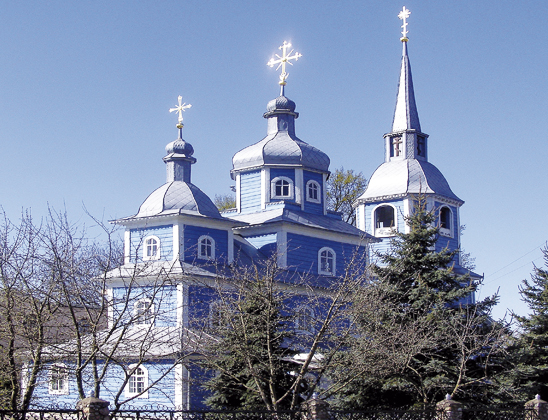
St. Michael's Cathedral is the oldest church in the city that has survived to the present day. It was first mentioned in the 14th century. After the reconstruction of the XVIII century, it acquired a modern appearance and is now protected as an architectural monument. The church is built of wood and combines the features of Baroque and classicism in its appearance. The architecture of the temple is multi-tiered and consists of three log cabins, gradually growing from the altar to the entrance. The highest point is the bell tower with a pointed spire, the facade of the cathedral is decorated with arched windows. The overall appearance is a very harmonious and solemn composition. The cathedral is located on Socialist Street.
The building of the men's gymnasium on Komsomolskaya Street has also been preserved in the city. It was founded in 1617 by Prince Radziwill.
A curious tourist will find Vilenskaya Street in Slutsk to look at the former theological college. It was founded in 1776.
Along Red Army Street, only the building of the residential building remains of the former Bernardine monastery (1793). It now houses an oil depot.
The Slutsk Private Commercial School building was built in 1912 and was used as such until 1920, when it was burned down by Polish troops retreating from the city. By 1924, the Soviet authorities had restored the building and opened a seven-year school. Three years later, the educational institution became a pedagogical college, and three years later it was renamed a college. The building was damaged again in 1944 during the liberation of the city from the Nazis and stood dilapidated until 1960, when it was converted into a juice production plant. This appointment remained in place until 2014. Then the factory was liquidated, and the future of this building is uncertain.
The Slutsk postal station complex was built in the middle of the 19th century. It is an architectural monument of late classicism. Over the years, the buildings housed a carpool, a detox center, a road service, shops, and even living quarters.
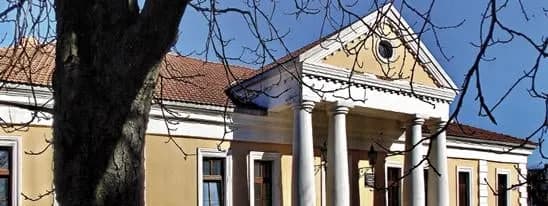
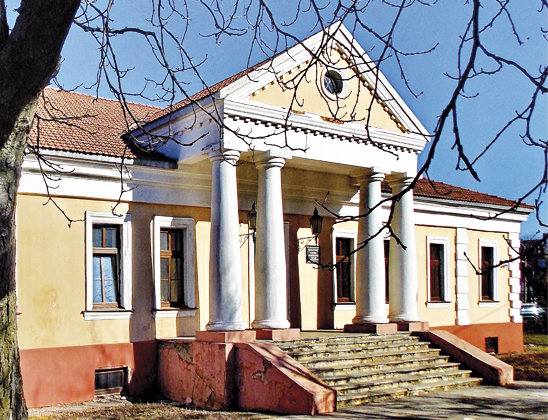
The old building of the Noble Assembly has been preserved at 171 Lenin Street. It was built at the end of the XVIII century in the classical style, the facade is decorated with four impressive columns and a massive pediment.
It was built as a manor house, changed many owners, and later passed into the possession of the city, whose authorities adapted it to their needs. Now the Slutsk Museum of Local Lore is located here with a rather interesting exposition telling about the history of the city.
Bolotchitsy
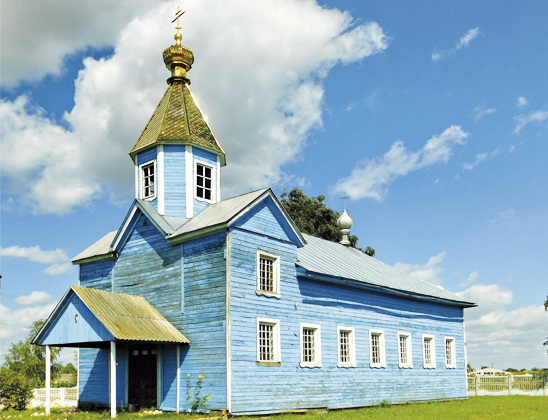
The wooden church of the Holy Virgin Mary was built in 1834 in the style of folk architecture. It was closed by the Tsarist authorities in 1863 and only in 1891 began to operate, but as the Orthodox Church of the Transfiguration. In 1956, the church was closed and given over to a warehouse of pesticides. In 1992, the church reopened to the faithful. An architectural monument of wooden architecture, now the temple is in disrepair.
Ivan
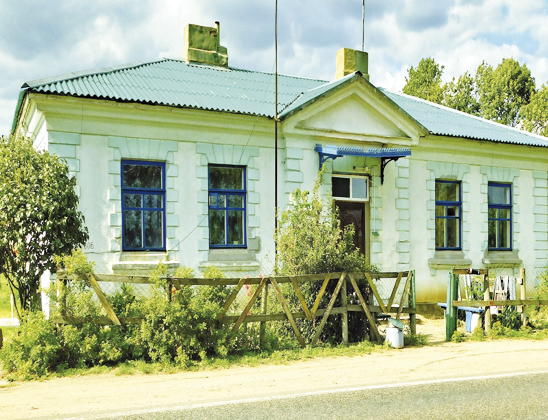
An example of the architecture of post houses made of brick in the classical style. Perhaps this is a sample of a typical project. In 1852, an outpost house was built on the old post road, and today it is the P43 road. The outbuildings that were erected next to the house have not been preserved.
Kirovo
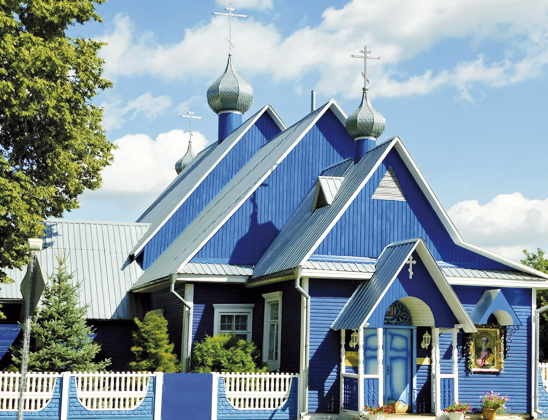
Until 1935, this village was known as Tsarevtsy. A cinema was built in 1931 from the logs of the wooden church, which was built here back in 1876. Two years later, it was already a village club. At the end of the 20th century, the club building was handed over to Orthodox believers and consecrated as the Church of St. John the Theologian. Across the street from the temple is the stone building of the national school, built in 1893.
Khotinovo
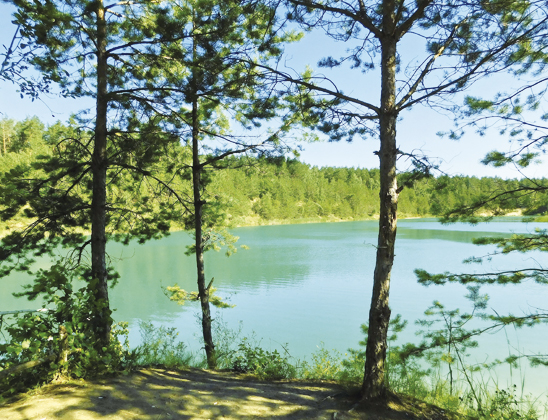
Among a small forest area, about one kilometer from the village, there is an opportunity to see dozens of small quarries filled with water. This place is loved by tourists and amateur photographers.
Smolgovo
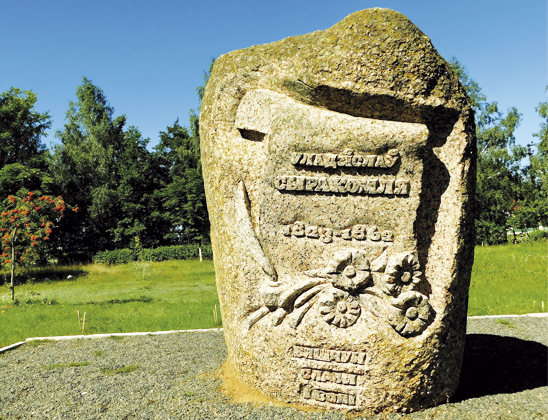
Our illustrious countryman Ludwig Vladislav Frantisek Kondratovich, known as Vladislav Syrokomlya, was born in this village. There is a museum of the famous writer in the village. A memorial stone has been erected in the courtyard of the village school, on which the words "to the Magus of glory and freedom" are stamped.
Chizhevichi
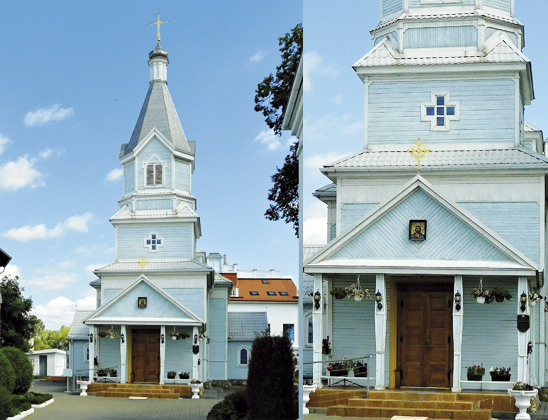
The Church of the Intercession was built in the 19th century from wood. The temple is a monument of wooden architecture with Borocco features.
Teraspol
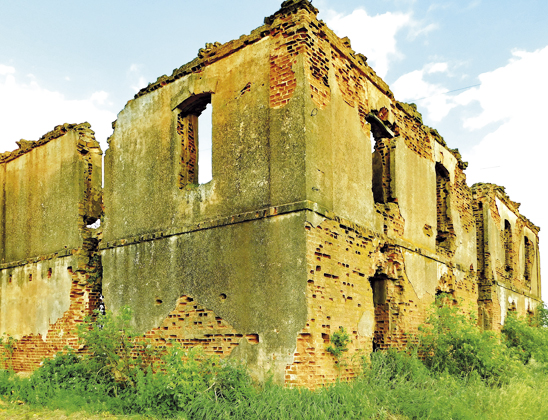
On the P43 road, the post office building, built in 1848, has been preserved to this day. In a field on the edge of the village, you can see the ruins of a manor house built in the middle of the 19th century. Old-timers remember the last owner of this house, Mrs. Sennitskaya. Previously, this village was called Sennitskoye.
Churchyard
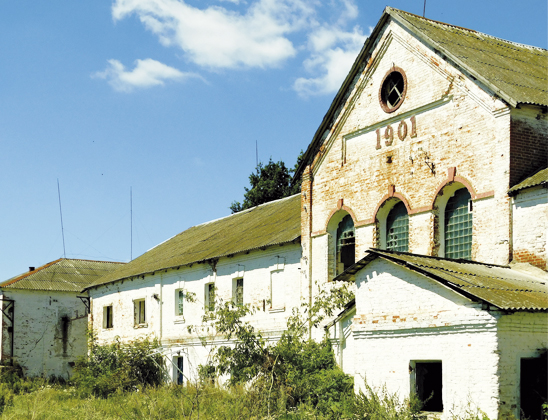
In 1883, the building of the national school was erected here. A huge, five-storey brick steam mill building, built in 1900, has been preserved from the once rich estate. It stands on the edge of a swampy meadow. In the village itself, an operating distillery has been preserved in excellent condition until recently. It was built in 1901.
The legend from the author of the project
The Christmas Star
Ending. Beginning at No. 52
Do you remember how the first part of our Christmas story ended? The little star woke up when she was already very far from her land. The older stars apologized, of course, for not waking the baby up before flying off into the sky. But she couldn't resist their insults. They were family and friends. And on Earth, the little star had a sick girl who also fervently, sincerely, and childishly loved her.
So, the stars scattered across the firmament. Who's staying where. And everything was illuminated with starlight so brightly that even on a distant Earth, people living there saw these stars and felt that the connection between them had not diminished. No matter how far they are from each other.
The little star has also found a quiet corner in the vast cosmos. But no matter how good it was there, the anxiety about that small and sweet creature that remained on earth did not leave. And she turned to her sister stars and told them about her intention to return to Earth. </P>
"Yes," they replied, "you can do it." But you will have the only opportunity. You won't be able to come back to us anymore. And that's the reason why we didn't leave you on Earth.
The star hugged her sisters, saying that she could not do otherwise. She accepts this condition in order to return to the poor child.
She folded her ray-wings and glided from a heavenly height to a distant planet.
But it was winter on Earth, and everything was wrapped in white snow. People celebrate Christmas. Costumed people walked through the streets singing, carrying Christmas stars decorated with colored ribbons in front of them on six. There was a lot of fun, songs and music. Only in a small house on the edge of the village, a little girl sat by the window and looked longingly at the street. And by the bed was a modest Christmas star she had recently made.
Her mother came into the room.
"Let's not be sad on a night like this," she said. - Let's make a wish, let's look at the sky together, where your little star has settled. And whatever we order will certainly come true.
And they aimed their gazes at the starry sky. At the same moment, a thin trail of a shooting star passed through the entire sky.
"That's a good sign," the mother said. And, sighing sadly, she went into the next room.
As soon as the baby was left alone, a barely noticeable ray slid through the window onto the palm of her hand. The girl immediately realized who had returned to her.
Immediately, a gentle, quiet voice sounded:
"I'm back, and I'll never leave you again." When I was flying to earth, I heard your and Mom's wish, the same for both of them, that you were healthy. I promise that everything will be like this-I will always be by your side and will protect you as best I can. I'm going to live here.
And the star, nimbly sliding off the baby's palms, dived into the Christmas star created by the girl. She shone with a blue light.
When mom entered the room again, she saw that a cheerful and healthy child was spinning there with a Christmas star in his hands.
"Mommy, honey," she said, "let's get dressed up as soon as possible and spend Christmas with everyone on the street!"