Rumors about Vladimir Tsvirko's private ethnographic museum have spread far and wide. It is located near Fanipol, in the village of Khodakovo. And the person who built it himself has several more professional and daily hobbies. Vladimir Andreevich is a draftsman, designer and artist, traveler and photographer, collector of legends and legends from various parts of our country.
Private collection of things from all over Belarus
It seems to be an ordinary two-storey house with a garden, but behind its fence the story is closely intertwined with a fairy tale. Vladimir Tsvirka's garage contains tools that were used in the last century. Not far from a shady garden with a pond, a hut on chicken legs lurks under a tree, which is tirelessly guarded by a Baba Yaga doll. The epicenter of attention is the smallest windmill in Belarus. Vladimir Andreevich once bought it, and then restored every detail with his own hands. The professional design eye of the master is visible from afar: the mill looks stylish and modern. And most importantly, you can grind flour on it right now.
When you enter a house, you don't know what to look at. The interior of each room takes us back to the time of our ancestors. Collections of inkwells, ancient Christmas decorations, woven towels, embroidered paintings, film filmstrips, black and white photographs, ceramics, books, flags, cups and coins - it seems that you are walking through centuries. There is a real bear skin on the floor in one of the rooms, roe deer and deer horns hang on the wall, and in the corner there is a magic mirror of a witch brought from one of her trips to Belarus. In this house, every thing has its place.
The idea of purposefully collecting ancient witnesses of the past came to Vladimir Tsvirko rather banally:
- When my mother died, my older brother and I were left with a house. I didn't want to take anything away from here at all, because this is my hometown, which I will visit and in which every thing will remind me of the moments of my childhood and youth. But I really wanted to take three items with me: a bread shovel, an iron, in which there are still embers laid by my mother, as well as a guard. At first, there was an empty sheathed house on the site of this plot of land, in which there were only three objects. And at that moment, I realized that there should be more of these things here, because this is where they really belong. At that time, I had not yet launched the 150 Golden Routes of my Belarus project. And then, when I started traveling around our homeland, I was very surprised and even outraged by one thing. Before my eyes, all the achievements of our past were disappearing. They were thrown into the oven, burned, and buried. It was very frustrating that it was all being lost—there would be nothing left for us tomorrow.
People who attend a self-organized exhibition of antiques often recall their past. Some are so inspired by this business that they climb into their attics and canopies, discover once-forgotten Bunnies and barns, and recreate the history of our Homeland.
- People often bring things to my collection or keep them for themselves for a long time. The main thing is that they are starting to turn to history, which means that my work is not being done in vain," admits Vladimir Tsvirko.
Travel and travel
Around 2010, a project called "150 Golden routes of my Belarus" was launched. For eight years, Vladimir Andreevich has been traveling to different parts of our native land, composing guided tours, photographing finds and magnificent landscapes, and communicating with local residents. In this way, he collects various legends and legends, writes them down for himself and attaches them to the passage of time.
- Today I understand that the project has expanded significantly over the years. This is not 150 routes, but really 200. I have a few trips left to make to the Grodno region, one trip to G G90⟫, and the project will be completed. But, you know, I won't be able to not travel anymore.
The Dzerzhinsky district has become not only one of Vladimir Tsvirko's destinations. The Dzerzhinsk region welcomed him with a journey through an interesting and rich historical past. From here he brought and put in his piggy bank 10 legends, two books from the 1930s, three embroidered paintings, an old pre-war mirror, a bread shovel, and a beautifully shaped awl. An unusual story about a clock appeared in his collection, which, according to the legend of the "attic clock", saved four human lives.
- There is no such thing as an attic clock, and no one has ever produced one. It's just that the people who helped collect the artifacts of the Dzerzhinsky district's heritage took it down from the canopy and solemnly presented it to me. In addition, all the legends that I bring from different corners are tied to a place. It is difficult to call them historical facts, but they have grounds for existence. I call the collected legends "fairy tales for adults," Vladimir Andreevich smiles.
Vladimir Tsvirko visited all the places of the Dzerzhinsky district. What struck him most was that there had once been a real castle here, but what disappointed him was that now there was not even a trace of it.
- It is wonderful that attention is paid to architectural monuments, the history of the region is preserved. I was the one who liked the beautifully restored and restored church and church. One of my favorite places is the archive of film and photographic documents. I associate it with a repository of the Belarusian past. When you drive along the Brest highway, this building stands like a lighthouse. At first it seems to be an ordinary beautiful facade, but when you start to delve into the very essence, you understand its significance and value.
In addition to the project "150 golden routes of my Belarus", Vladimir Tsvirko is actively engaged in several more. Among them are "our ruins", "infinitely charming...", "silhouettes of heritage", "random snapshot".
There is also a very interesting thematic project called "pyramids of Belarus".
- The first thing you see on people's faces when you tell them that we have pyramids is surprise and disbelief, — explains Vladimir Andreevich. - We don't even know our country so well that almost everyone is shocked by such a "discovery" as the "pyramids of Belarus". And they're very close! For example, one of the pyramids is located in the city G G178.. This is the ancestral chapel, the tomb of the Princes. It is more than three hundred years old.
Stankovo
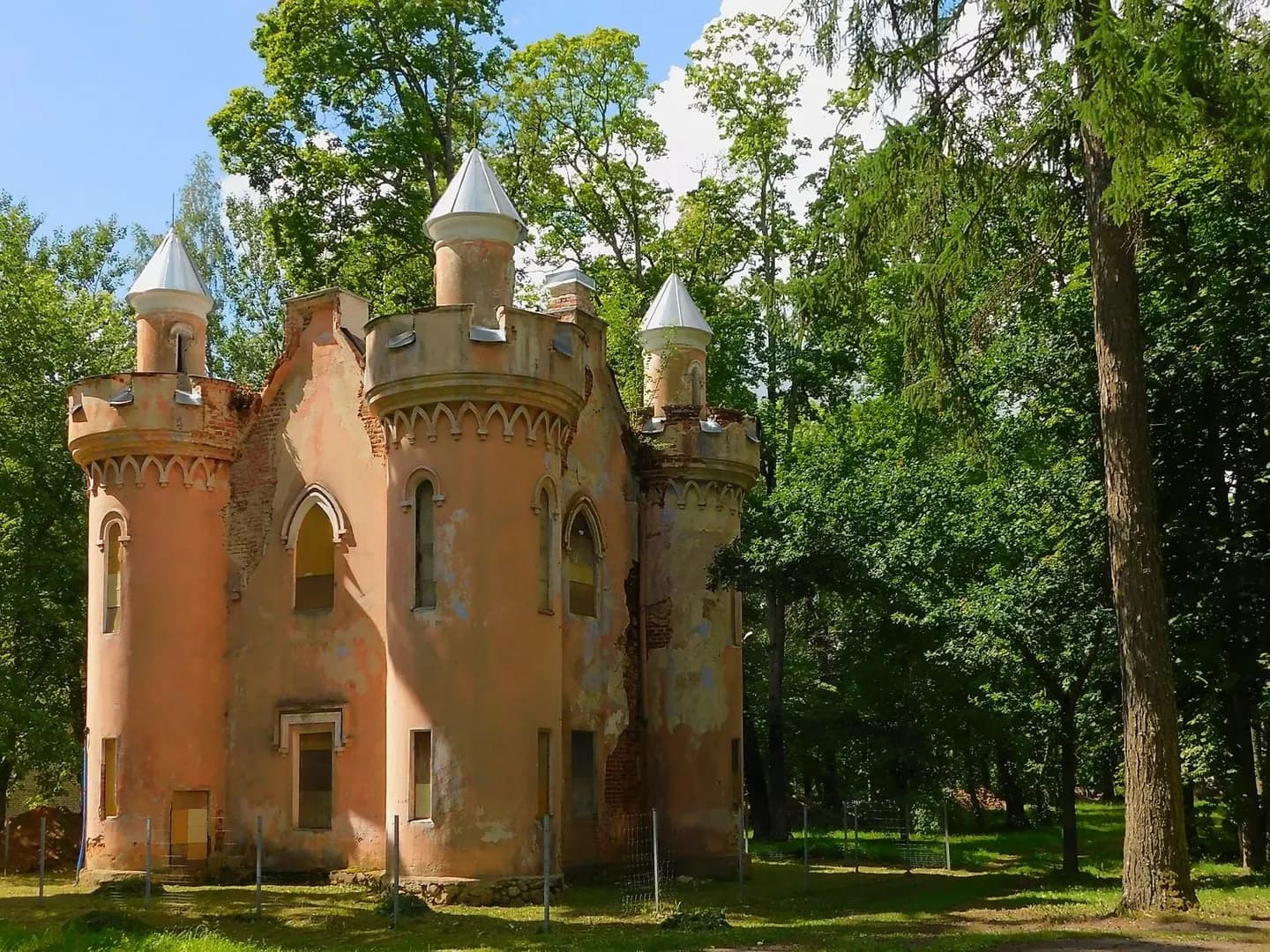
Vladimir Tsvirko visited this place more than once. It's hard to resist and pass by the architectural wonders, he admits. The former Chapsky estate captured the heart of a seasoned traveler.
- Most of all, I like the manor house, which is located in the park. Most often, few people reach her. There is also a very interesting thing not far from these gates. The spacious glades where Chapsky's greenhouses and greenhouses once stood. Pineapples were grown in such quantities that they were still enough for sale. This miracle was carried not only to the Minsk fairs, but also to European stalls.
Love at a glance
Vladimir Tsvirko, a draftsman and designer, went abroad one day. He returned, bringing with him the love of a pedestrian gaze... Into the stained glass windows! The first city where he saw this miracle was Warsaw. In a local cafe, there was something on the tables that he had not yet encountered in his homeland. Vladimir Andreevich was engaged in stained glass windows, but it was different, not the same. But the Tiffany's manufacturing technique is something unusual.
After returning home, he couldn't stop thinking about bringing such beauty to life in his workshop. He was told from all sides: "Do you have any idea how difficult this is?" But it was impossible to stop the creative fervor. Vladimir Andreevich studied by the method of "espionage": in a Polish workshop where stained glass windows were made, he walked, looked, memorized. After much trial and error, it finally worked out. With such a stained glass window, it was not a shame to go to people and demonstrate the results of the work. By the way, she was highly appreciated. Orders have been sent. At first, of course, there was no big money. For example, from the first order, the masters earned a whole ruble! Vladimir Andreevich carefully keeps it in his collection to this day.
When the fame of the master stained glass artist spread, people came to him and asked him to sell them ordinary glass. They said that they are engaged in the repair and restoration of the temple. Upon learning that the ruins of the Uniate temple are located under the World on the banks of the Neman River, where Vladimir Tsvirko was born and raised, he immediately offered his help. Instead of transparent glass, the entire temple was soon decorated with stained glass windows. The locals didn't know how to thank the master, but he calmly replied:
- My parents were married in the world, and their funeral service was held there. I was baptized in this town, and my first love happened in it. It was my duty.
The origins of talents
When asked who became a teacher and a model for a master who was talented in almost all matters, Vladimir Andreevich answered in the following way:
- Nobody taught me specifically. My father always made something, he was a very economical man. When he was minding his own business, I was sitting next to him and it was interesting for me to try it too. I would start doing something, and my father would just watch me try. They picked me up in the morning and said that today we would go, for example, to lay bricks. My mother was sensitive, like all women, and at first she was suspicious of this idea and worried about me. But everything worked out for me because my father was a wise man, he understood what was in my power. And so little by little I learned.
Vladimir Andreevich adopted most of the characteristic features and traditions from his parents. Making Easter buns in the Tsvirka family is a man's business that stretches across generations.
- I often watched my father make rolls, what he adds to them, How to put a loaf of bread in the oven- it's a whole science!
But his parents were negative about his son's artistic hobbies. The drawings were destroyed more than once by the flames in the furnace.
- My parents didn't think it was necessary to be very different. It's worth becoming an engineer, not an artist. My mother could still understand the matter, but my father was very strict. That's why I was a little bit tricky and hid all my drawings at school. But I still had a lot of respect for my parents. Not because they were my parents, but because I saw how other people treated them. And it was immediately clear that bad people would not be so respected.
Vladimir Tsvirko is not going to stop. When he completes one task, he immediately thinks about what he will do tomorrow. And his plans are ambitious: to build a nativity scene where the works of Belarusian classics will be shown in a modern interpretation; to start a blog in which he will talk in detail about his projects, as well as contribute to the study of the historical past and modern our region.…
A legend brought by Vladimir Tsvirko from the Dzerzhinsky district
The artist's son
The owner of the local estate, a middle-aged widow, built a small stone chapel next to her estate, in a cozy, shady clearing in an old park laid out by her grandfather. She invited a local self-taught artist to paint the chapel. He gladly agreed, as he had already had the experience of painting a wooden temple in his native village. The artist had three sons. The youngest of them also became addicted to drawing. The boy was good at his age, so his father took him to work with him from time to time.
After learning that the owner of the estate invited his father to work, the boy began to ask to go with him to help. Then the artist told the customer about his son's request. The cautious lady refused the artist, as she believed that the work would be difficult and responsible, so she could not entrust her baby to a guy. The artist handed over the lady's will to his son and, having received a deposit, began to paint the chapel alone.
The boy, of course, was upset and decided to act as follows. Since his father worked inside the chapel, the little artist began secretly painting a niche in the altar wall of the building at night. He worked at dusk, fearing that the mistress of the manor would find out about his willfulness and refuse to work for his father. And so that his paintings would not be accidentally seen during the day, he made a wooden shield and painted it under the stone of the chapel wall. In the morning, when he went home, he put up a shield so that nothing could be seen. The young artist always worked without a candle or a lantern, only the moonlight helped him.
The first frosts came, and the boy had to finish his painting as soon as possible, but the poor guy became very ill. Every day the little creator got worse and worse. When he finally fell ill, only then did he dare to reveal his secret to his parents. Together with the hostess, they took off the shield and saw an almost finished wonderful painting with the image of the Savior. Meanwhile, the boy was fading away before his eyes. There was no time to delay, so the mistress of the estate allocated her carriage with a coachman and ordered the young creator to be taken to Vilnius. The boy was rescued, and he stayed to study at a local art institution with the money that his rescuer sent him all the time.
The traces of the future fate of this artist have been lost. This lady has been dead for a long time, her descendants have left the world. The manor itself and most of the outbuildings were badly damaged by time, but the painting on the altar wall of the small chapel could be seen for many more years. The chapel was located in the village of Slobodka, Dzerzhinsky district.
Vladimir Tsvirko: "I've traveled all over Belarus, but I still don't know my country. Because there are many years of history behind every asset, and it also needs to be studied. We are an interesting people, and our past dates far back to 1941. We have thousands of years behind us."
Alexandra Dudenkova