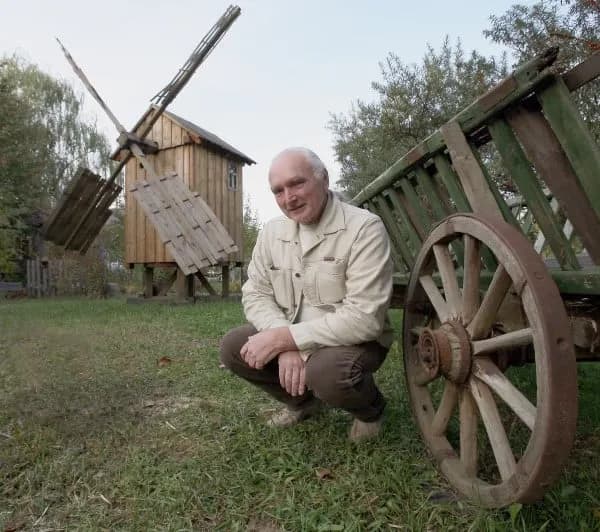
Vladimir Tsvirko, an artist-designer and restorer, is looking for interesting buildings in Belarus. He has already spent 150 hours in archives and a day on the road. For four years now, the Minsk-based designer and restorer has been working.…
Vladimir Tsvirko, an artist, designer and restorer, is looking for interesting buildings in Belarus - there are already 150
Hours in the archives, days on the road - for the past four years, Minsk-based artist, designer and restorer Vladimir Tsvirko has been studying the cities, villages and even farms of the country in detail. He searches for interesting buildings, manors, and collects legends and tales related to them. And then, based on the information received, he makes up guided routes around the country. He says there are 150 of them in total. < / strong> < / p >
Vladimir brings maps of the regions," and the conversation becomes more constructive: "He hooked me somehow by chance. Canadians came to visit a friend, and she took them to Nesvizh. A hundred kilometers there, the same amount back, and on the way to me. I see that I am glad and not. They say we've been circling for so long, but we haven't had a complete impression of the country. I asked a friend, "Did you stop by the Uniate church on your way to Vishnevets? And the Brochotsky estates in the Great Courtyard?"No! It's such a long way to drive your car and just look at the castle! The next day we went again, but already visiting the sights I mentioned. And this, the foreigners later admitted, was a completely different trip."
in general, the guests were satisfied, and Vladimir Tsvirko had an idea: to create a tourist project that would include not only well-known trails, but also unfamiliar ones."For the first time, the idea was tested with friends," the source continues.
- Let's go to Grozovo, Kopylsky district, to see the Merzhievsky Palace and the Jewish cemetery. We looked in Komsomolsk and Sunai, and also in Zabolot, where amateur builders built their temple in the XVIII century. Of course, it's not a masterpiece of architecture, but it's interesting how ordinary people, not experts, built a building that has been standing for three centuries."
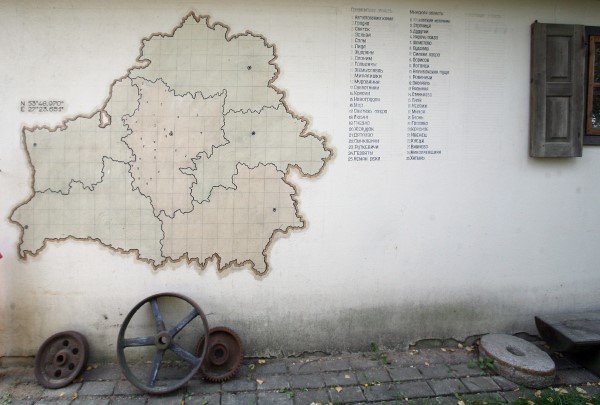
< p>The photos taken during the trip were the beginning of a long-term study. "Studying documents and reference books, I marked on the maps of the regions where and which objects are located," Vladimir shows the markings. - Then the regions were divided into "islands". There are 8-9 nearby settlements with interesting monuments, churches, and natural sites."
< p>In front of me are the routes of the Minsk region, there are 29 of them. I'm looking through the first one, "Benica." From the exotic, the Kozlovka windmill in Soltany. There are only 5-6 of them left in the country. There is an official website in Yakhimovshchina, where Yanka Kupala once worked as a distiller's assistant at the Sulistrovsky estate.
The traveler also has personal finds. In the photo Berezovets Korelichsky district. "There is a dilapidated temple here, no windows have been preserved, no doors, and instead of an altar there are flowers," Vladimir intrigues. "An old woman told me: there are a couple of old people left here, they don't have the strength to go to the neighboring village to pray. Sometimes they ask them to conduct services in the old church. "But the building has no roof," I say. "Is it suddenly raining?""I've never been there yet," he replies.
and Tsvirko has a lot of such stories. During his research, he has already studied in detail the Minsk, Brest and Grodno regions. Routes have also been identified in other regions, but work is still ongoing there.
"I tried to make the paths as convenient as possible so that a person would have enough time for a trip and viewing," the artist-designer continues. - Because of this, I admit, there were a lot of difficulties. The Minsk region, for example, was "reshaped" three times. Well, how else?! Take the village of Makasichi, where there is a stone in the form of an armchair. And so I twisted it, and this one — it doesn't fit into any flight. Of course, I'll go and take a look. The stone, as luck would have it, turned out to be beautiful, and even with a story. An evil aunt, they say, once sent her little niece into the forest to get firewood. On the way, the girl was overtaken by a thunderstorm. Trying to hide, she ran up to the stone, at the same moment lightning struck it and knocked off a piece. The girl sat out the bad weather under it. After that, the stone began to resemble a chair, which was called a Paraski Chair. In general, I couldn't leave Makasichi off the route""
- are there any excursions for extreme tourists in your collection? - I'm interested.
— Our roads are not bad, that's why the obstacle courses don't work right away, — the interlocutor smiles. - But there are a couple of gourmet flights. Do you want to see the pyramids of Belarus, or stone crosses, or maybe wooden houses with thatched roofs?! I have called these routes thematic.
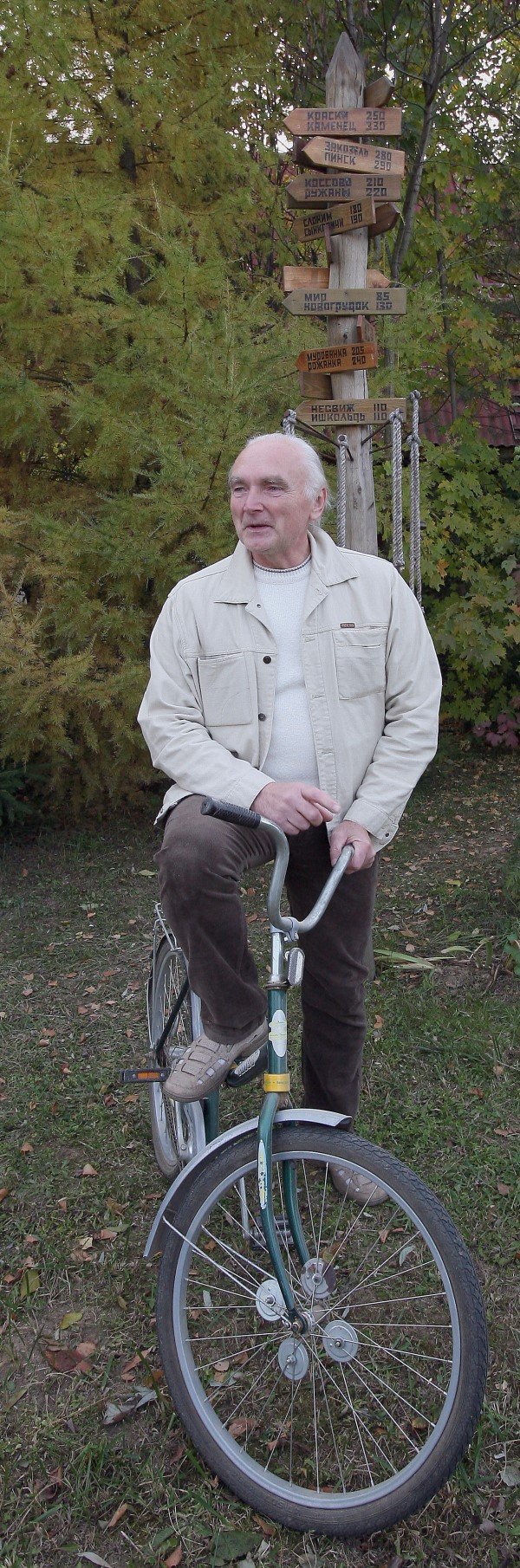
< P> By the way, a new one has emerged from this project — "our ruins". The interlocutor continues: "Take at least the village of Smolyany in Vitebsk region. Here, consider it a museum of beautiful ruins: the ruins of Smolyan Castle, the Church of the Virgin Mary, the church of St. Alexy, the tomb chapel in the form of a pyramid. There is also a unique two-storey church, with the second floor located underground. Where else would you find such a thing?!"
A Minsk resident can talk about trips and routes for a very long time. But when it comes to traveling, it's better to see it once than to listen for hours. Moreover, there is a guidebook on these very roads called "150 golden routes of my Belarus". Recently, Vladimir Tsvirko published the first booklet with four directions and maps of the Minsk region. The second one is coming.
"Rain, and let's go," I say.
The interlocutor disagrees: "Winter and autumn are no less beautiful. The main thing is the desire to see this beautiful thing."
PANTELEEVA Ekaterina Yurievna
Photo: Alexander STADUB