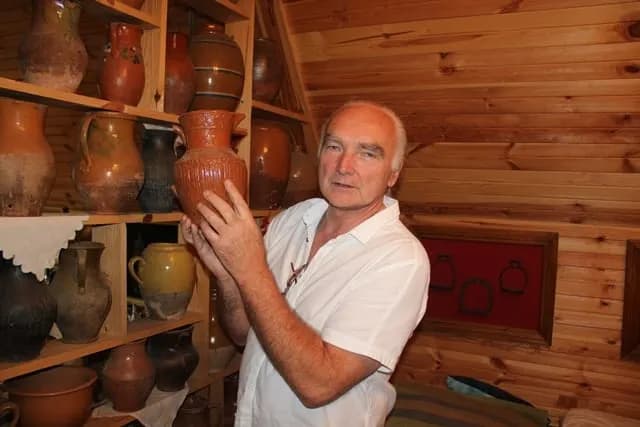
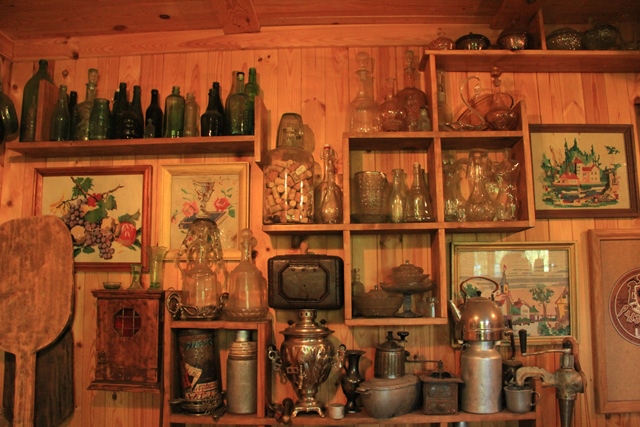
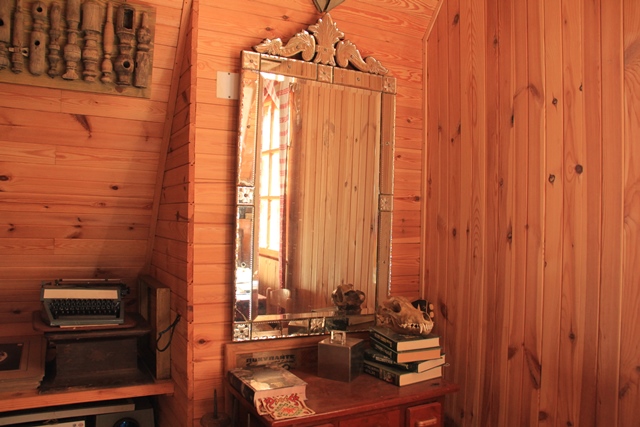
there are no separate museum halls in Vladimir Tsvirko's country house. Every corner of the suburban family fortress is filled with a wide variety of antique items. Everything is here: tools, various kitchen utensils, woven towels, books, posters, postcards, typewriters, flags...
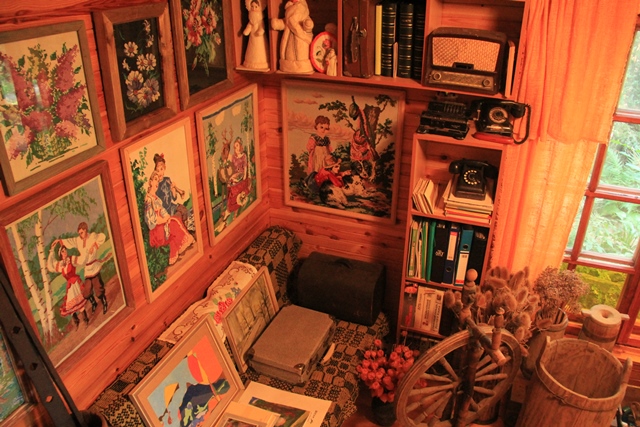
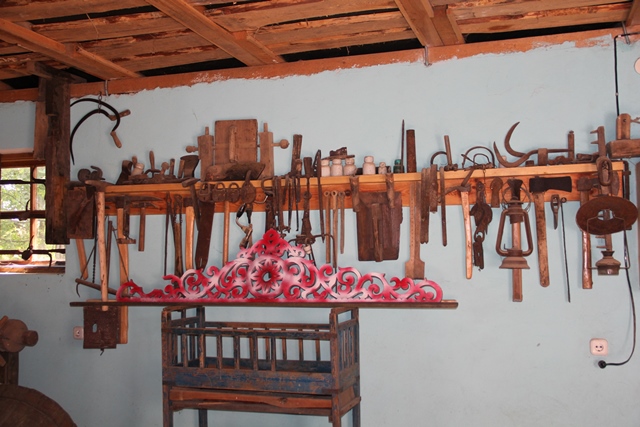
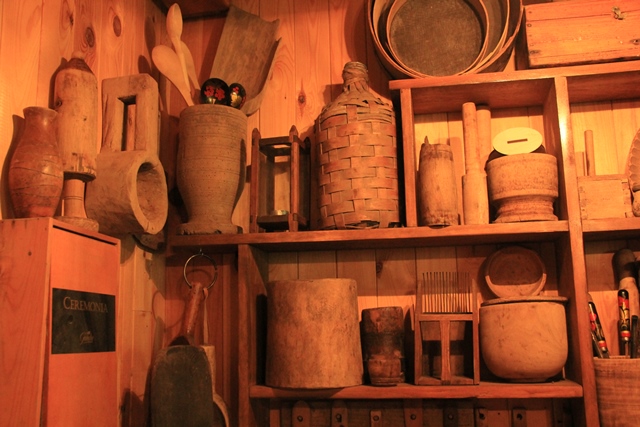
what is not real wooden lace? And all this beauty is now disappearing without a trace...
and there are plenty of embroidered paintings in the unusual museum for a separate exhibition. Most of the embroidery is done on white fabric, but there are also paintings embroidered on a black background in the collection, they are considered more rare and valuable.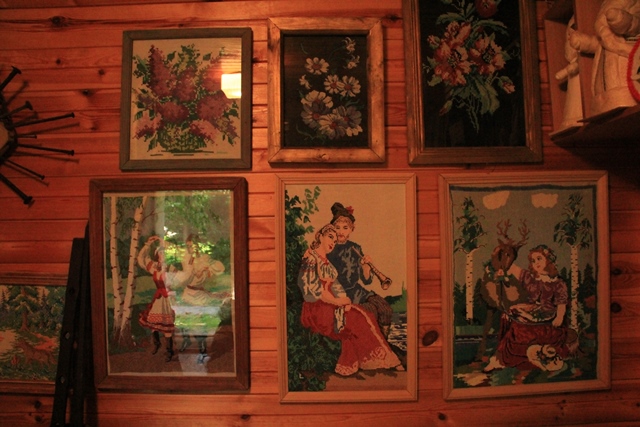
a lot of space is devoted to old household items. All the kitchen utensils are lovingly arranged on the shelves. Vladimir Tsvirko's cottage has a whole collection of ceramic tableware. Each exhibit has its own purpose. The jug with the star on the neck stands out from all of them. He once decorated one of the embassies of the BSSR, and was later brought from there by the diplomat's daughter. The unusual museum has also found a place for various contraptions that used to be in many farms. Now you can't find them in the daytime with fire. So, the owner of the cottage demonstrates an ordinary-looking wooden box, one of its sides is pressed in and squeezed out. It was used in the 20s of the last century under an Elephant. How did she serve? Oil was formed with its help. Subsequently, the commercial products were transported for sale.It would seem a small thing, but it says a lot, first of all about the culture of our people, Vladimir Andreevich notes.For the same reason, cheese-slicing presses are no less valuable. Ingenious inventions in their simplicity.
The map of Belarus, which shows the tourist routes he developed, is of great importance to the owner of the museum. Vladimir Andreevich personally drove through each one. There are about 200 of them now, and one route includes up to 10-12 historical sites. In general, travel and the projects that appear thanks to them are another bright page in the biography of Vladimir Tsvirko.the owner of the museum restores the antiques himself. More finds are waiting for their time in the workshop. The restoration of the windmill, built in 1936, was the largest. The collector brought it from the Drogichinsky district. The painstaking work lasted one year and ten days. The windmill, restored by Vladimir Chvirk, is considered the smallest in the country, and it is valid. Talking about the windmill, the collector never ceases to be amazed at the quickness, intelligence and talent of the craftsman who made it. Konstantin Ivanovich Zhitkovich built a mill alone. That's how Vladimir Andreevich decided to work. When the collector-restorer bought the windmill from Konstantin Ivanovich's relative, only the main parts of the Austrian-made gearbox, millstones and some other structural elements actually remained of the mill. Everything else, including the wings, was completely dilapidated or completely rotted away. There was a lot of trouble and worry, but the effort was worth it.
The design is well-thought-out and well-coordinated: a half-turn of the nut is enough to change the degree of grain grinding. That's how talented our people were! Vladimir Andreevich does not hide his admiration.The mill is surrounded by garden and park trees, about 30 varieties in total. The territory is well maintained and well maintained. There is Baba Yaga's house, which turns its back to the forest and its front to the guest, and a gazebo, a pond, and a swing.The collector says that the artifacts come to him in different ways. He brings something from his many trips around the country, friends bring something, and you have to buy something. If he asks to give or sell an item, he will definitely explain: It's for the museum. In most cases, people are very happy to give him old things, because unfortunately, children and grandchildren no longer need them, says Vladimir Andreevich.sometimes donors come to the museum. They are welcome here. The collector never refuses anyone an excursion. Vladimir Tsvirko recalls an incident. An old man came to visit him, who presented the museum with an antique clock. Then his "thing" had already been repaired. The owner of the museum shook the pendulum, and the clock went away. Tears welled up in the eyes of the elderly man...
But I just saved the item... To this day, the owner of the museum is impressed. Vladimir Tsvirko really preserves, perhaps, the most important thing, without which it is impossible to imagine our past and what we must remember going into the future. This reverence for history is also passed on to his children, friends, acquaintances, and relatives. < P > dem. They think about their roofs, storerooms and kitchens, pull out who's what, restore inherited things, put them in a place of honor in the house.Svetlana VASCHILA < / strong> < / p>