What do we know about our Belarusian Stoneheads? Experts: archaeologists and historians may know, but not every Belarusian is aware of such places of worship. And even on these slides and…
What do we know about our Belarusian Stoneheads? Experts: archaeologists and historians may know, but not every Belarusian is aware of such places of worship. And even if there are no such stone monoliths on these slides as in England, and even if they are not popular all over the world like their magnificent brother, but in those far, far times such places were revered by our ancestors no less. They were visited during religious ceremonies and on holidays in honor of the gods.
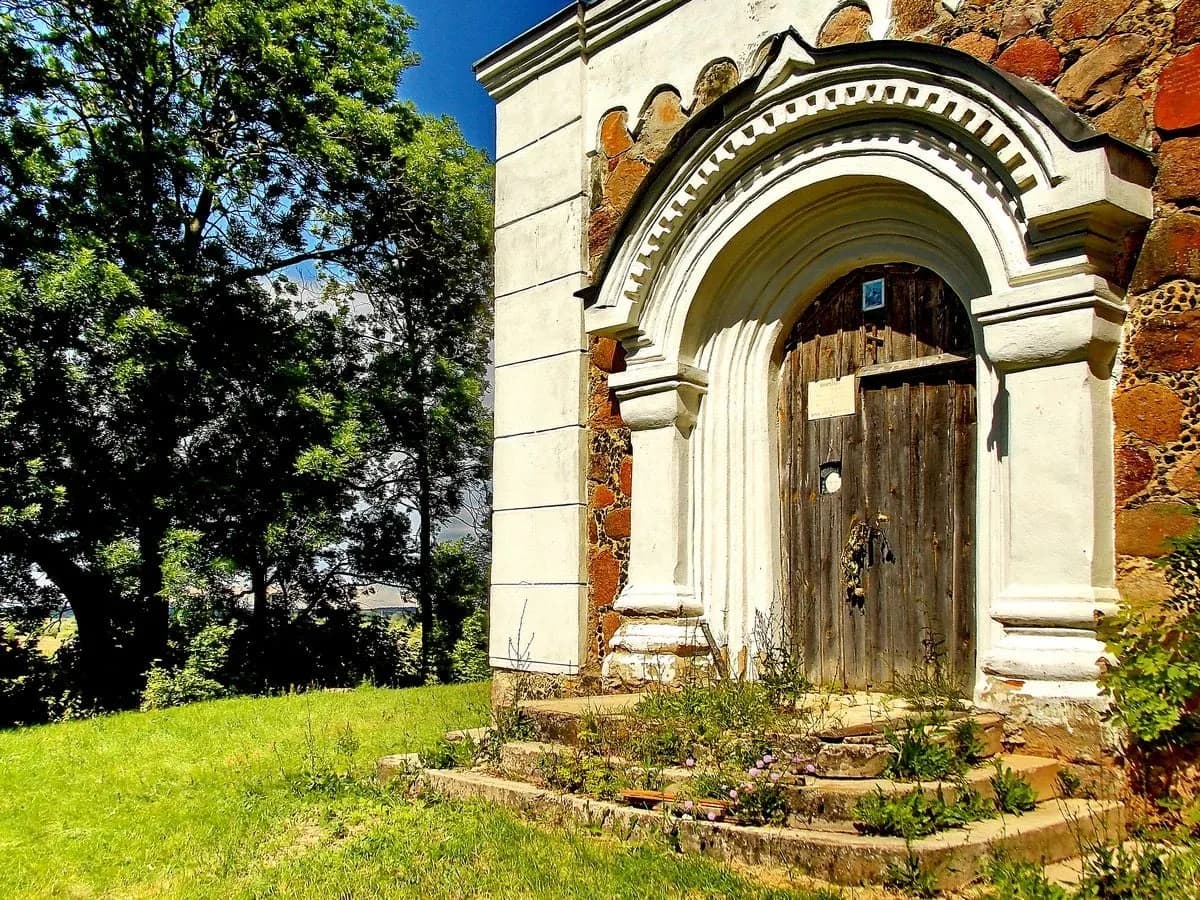
The church stood some distance from the village, on a steep riverbank. Wonderful horizons spread out from the temple for about twenty versts. The open space seemed to raise the shore with the river even higher to the sky, and this temple, on the steps of which sat a baby granny in a colored shawl and with a wicker basket in her hands. Because of her cheerful narrowed eyes, her face seemed to be filled with happiness and tranquility.
After greeting her, he immediately asked her with interest why the shrine was built so far from the village.
"Please sit down," she invited me, slapping the stairs with her palm.
babulechka began her story like this: previously, in every village there was a person who had knowledge of where and when to build a temple. They were afraid that they had been taught this since childhood, whether it was a boy or a girl. In the family of my interlocutor, her great-grandmother possessed such knowledge. They were inherited by her grandmother. She pointed out that it was this place that needed to be consecrated and a temple of the Lord built here.
And from generation to generation, the story was passed down in their family that this hill on the riverbank was once, a long time ago, a pagan temple. But the most amazing thing, it was retold, was how the temple was built. I'll tell you how I heard it, how I remembered it.
It was a round, regular-shaped elevation, perhaps created by man, or perhaps by mother nature itself. Three huge wheels with a central elevation inside. The first, largest wheel was made of thick logs and divided into four parts. In the same row with the logs stood oak idols, each of which symbolized a quarter of the year. The passages marked the summer and winter solstice, the spring and autumn equinox. In the middle of the temple, behind this large wheel, there was a smaller wheel, lower and made of thinner logs. There was a wide passage between the two circles. The inner fence was also divided into four parts, and the passageways between them were aligned with the passageways of the outer wheel.
The most important holiday of the ancient people was the day of the summer solstice. An embankment was made in the center of the temple with the help of boulders, on which, surrounded by two hundred smaller stones, there was a place for a sacrificial fire. Honey and milk, bunches of herbs, and the paws and heads of black roosters were brought to him. Widows carried their hair, unmarried girls-woven ribbons from headdresses, older men – beads from the tusks of slaughtered animals, and young boys brought figurines of deities made of wood or bone. What was burned and what was left at the foot of the sacred bonfire.
Granny remembered that this place used to be called Ladovaya Gora or Ladovaya Wheel, in honor of Lada, the deity who was responsible for the order in this world, for the alternation of the seasons, the alternation of day and night, and the movement of the Moon and Sun across the sky.
"Okay," my companion said after a short silence. "I'll go." I had a rest talking to you. Maybe I'll prove something at home. I'll collect the herbalists on the way, and I'll listen to the birds," she added as she was leaving, thus rejecting my offer of a ride. - And you, my dear, don't rush to go, sit in the fret wheel, gain strength... If you have to ... < / p>