"Wait a minute, I'll get dressed a little cleaner, and we'll go to my neighbor's." She'll tell you everything cleanly, as it is. She's very good at it.
And so we go with Aunt Manya, whom I just met, to the neighboring courtyard. And there are pancakes with blueberries, milk in glasses and a new story from Aunt Manya's neighbor, her good childhood friend Aunt Nastochka, who starts like this:
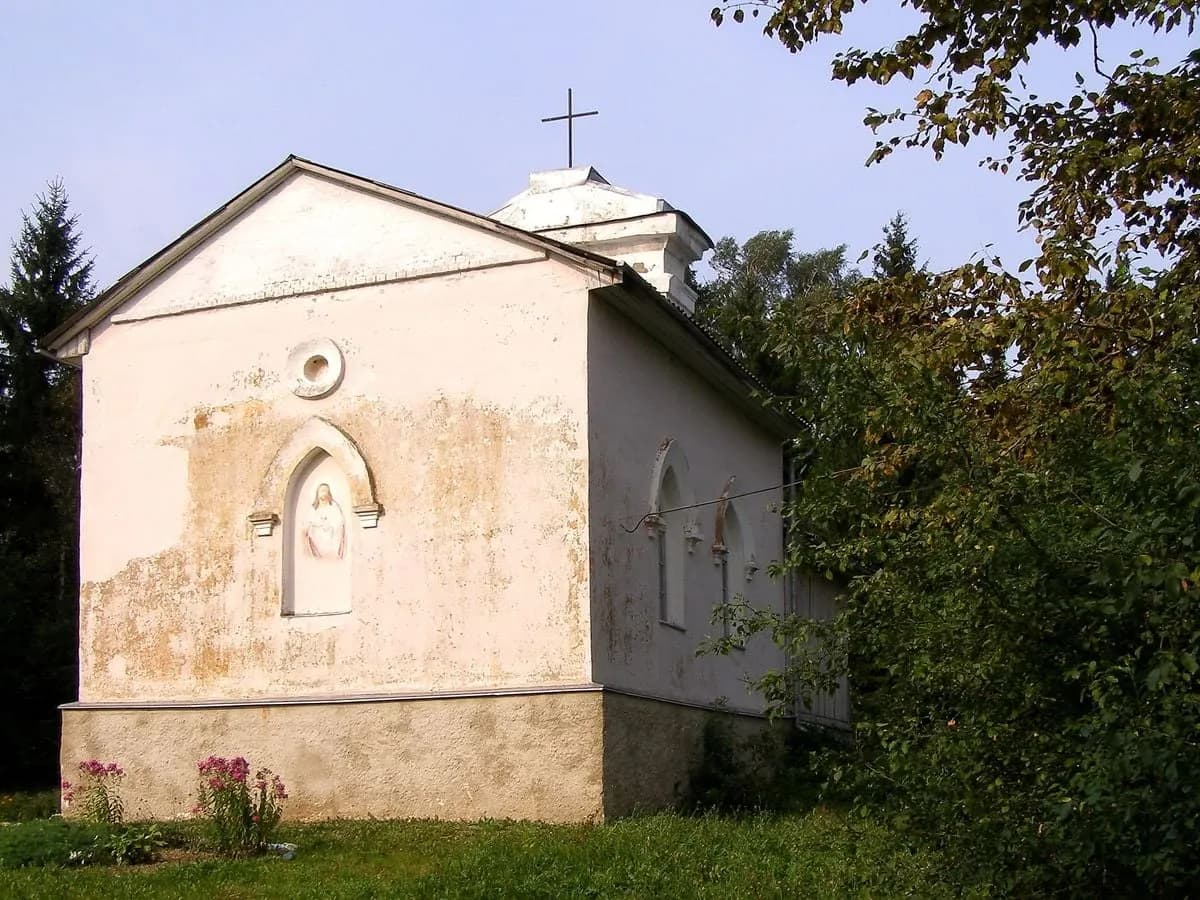
- The owner of the local estate, a middle–aged widow, built a small stone chapel next to her estate, in a cozy, shady clearing in the old park, laid out by her grandfather. She invited a local self-taught artist to paint the chapel. The master gladly agreed, especially since he already had experience of such work: he painted a wooden temple in his native village, which was located near the estate.
The artist had three sons, the youngest of whom also became addicted to drawing. The boy was good at his age, so his father once hired him as an apprentice.
After learning that the owner of the estate had offered his father a job, the boy began asking for help. Before allowing it, the father told about the request of the customer's son. The cautious lady refused the artist, as she believed that the work would be quite difficult and responsible, and she could not entrust it to a young boy.
What can you do-those were the conditions. The artist handed over the lady's will to his son and, having first received part of the money, began to paint the chapel.
And what about our young hero? Of course, he was upset by the refusal and decided to act as follows. Since his father worked from inside the chapel and always during the day, the guy, in turn, secretly began to paint the niche of the altar wall outside the building. He worked at night because he was afraid that the mistress of the manor would find out that he had not listened to her prohibition and would deprive his father of his job. And so that his work would not be seen during the day, he made a wooden shield to match the size of the niche and painted it to match the stone of the chapel wall. When the boy went home in the morning, he hung the shield in place, and no one could see or even suspect what was hidden under this wooden “blanket". The young artist always worked without a candle or a lantern. He only worked when the moon was shining, only when the moonlight helped him.
The mistress of the manor turned to the artist with this work in the middle of autumn. Long, cold nights and the first frosts soon set in. The boy was supposed to finish his painting soon, but he caught a bad cold and fell ill. Every day the little Creator got worse and worse, and when he finally fell ill, he decided to reveal his secret to his parents.
The father, in turn, told his son's story to the hostess. They immediately took off the shield and saw an almost finished wonderful painting depicting the Savior.
And the boy went out before my eyes. There was no time to delay, and the mistress of the estate, having allocated her carriage with a coachman, ordered to take the young talent to Vilnius.
The boy was rescued, and he stayed to study at a local art institution with the money that his rescuer constantly sent him.
Traces of the future fate of this young artist have been lost. The good lady has been dead for a long time, her descendants have left the universe. The manor itself and most of the outbuildings have been severely damaged by time and people. But the painting on the altar wall of the small chapel can still be seen today. And today, the Savior looks after us with hope and love.
"Listen," the women said at the end of our conversation. - If you write about everything and it gets published, it may happen that somewhere far away the relatives of that boy artist will read yes... but what ... They're probably very far away, and maybe they're not even alive. And mo ... I really want to believe …