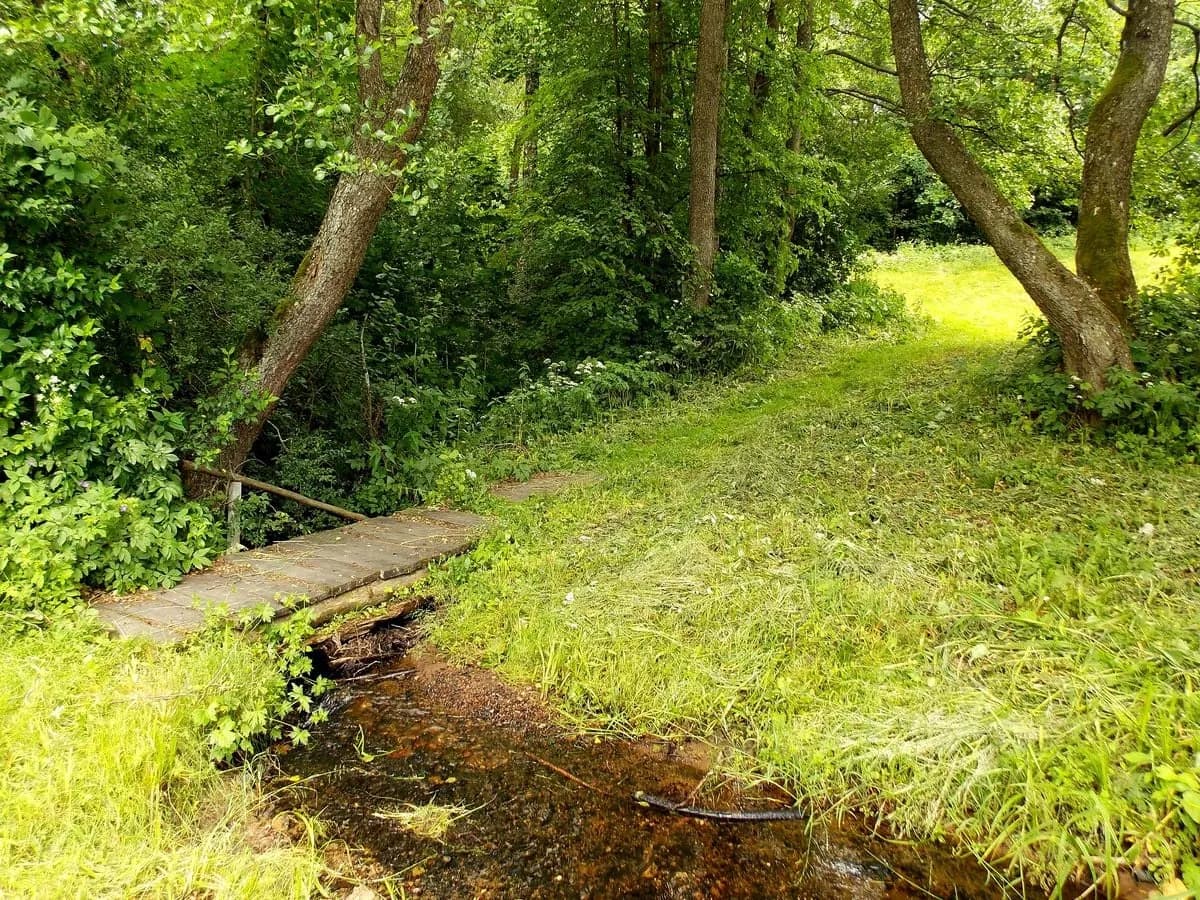
There are water meadows on both sides of the river. In the middle of summer, the water receded from the grasses, and only in places did the strangely shaped bald patches shine until autumn itself. It was time for haymaking. The grass was mowed and dried for three or four weeks, and then huge carts loaded with hay stretched along the village roads to the owners' sheds. One of the roads ran through an old dilapidated bridge near a lonely watermill. It was possible to cross this bridge to mow hay light, but there was no way to return loaded. But fortunately, there has been a ford a little higher up the river since ancient times, which could only be crossed at the end of summer, just after the haymaking season. It was this ford that was called the Goose Ford. Why? That's what our legend will be about.
Children used to be taken to the hay fields from the age when they could cook food, wash clothes, bring water, and clean the hut. One of the mowers, who had only girls in his family, took a daughter of about twelve with him. She was quick-witted and hardworking, a joy to her father, and she never refused to help other people in the parking lot.
The haymaking time flew by quickly. They began to get ready to go home before dawn: in the morning it was cool and the road seemed easier. We got to the mill before lunch. As always, we went straight across the bridge to the ford. The hay carts waddled slowly across the river to the other side.
What caused the mower's cart to overturn, which was with his girl at the hayfield – this is the tenth case. But a misfortune happened. The cart began to tilt, and the father and daughter fell from a great height to the ground with lightning speed. The man only broke his arm, but the unfortunate child hit her head on the rocks.
There are no words that can describe a father's grief. The whole village came to the cemetery in mourning. But listen to what happened next.…
The next year, there were only memories of the ill-fated ford that took the poor girl's life. But what to do? After haymaking, the carts loaded with hay started moving towards the ford again. We got there and hesitantly stopped: no one wanted to go into the water first. And suddenly, a white goose flew in from nowhere. She calmly entered the water and reached the opposite shore safely.
The horse, standing at the water's edge, harnessed to a loaded cart, followed the goose to the other side without prompting. All the other wagons crossed, without incident. And the goose disappeared as imperceptibly as it appeared.
People immediately started talking about the dead girl's soul in the neighborhood, as if she was helping the villagers cross the river. And so it happened every year after the haymaking. Before crossing, people left gifts for the white goose by the water: pieces of bread, sweets, bunches of herbs with flowers. After some time, a wooden chapel appeared on the shore. And since that time, no one has been hurt when crossing the ford. People began to call it the white Goose Ford, and then simply – Goose Ford.
During the Soviet militant atheism, the chapel was burned down. Today, people carry hay on machinery, and across the new bridge, but many villagers claim that even now they had to see a white goose at that ford, which flies from unknown places and flies to unknown places.…